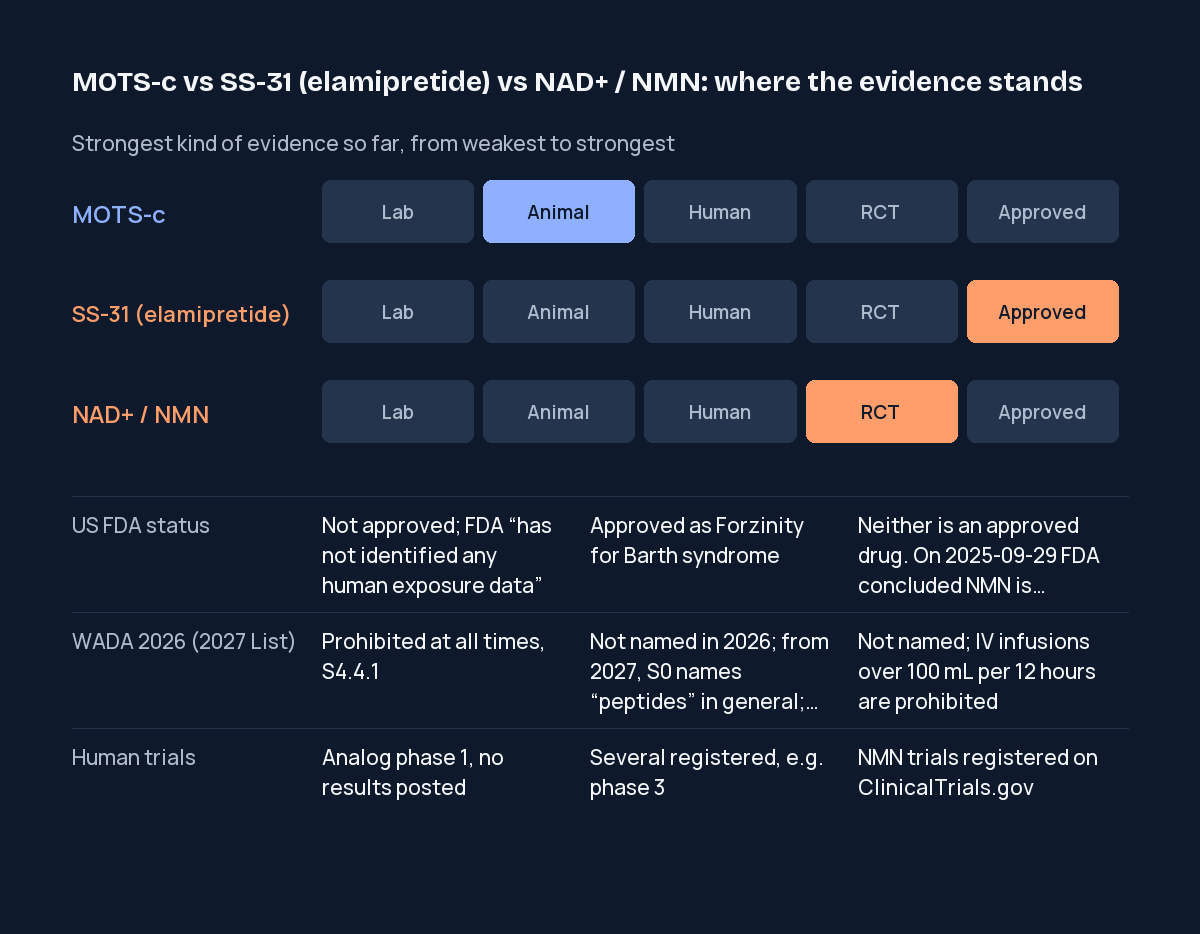
SS-31 (elamipretide) is the only one of the three with an FDA approval, as Forzinity for Barth syndrome (FDA). MOTS-c prevented diet-induced insulin resistance and obesity in mice (Lee 2015) [Animal], but no human treatment trial has been published. NAD+ is a coenzyme, not a peptide. NMN, the oral precursor of NAD+, raised blood NAD+ levels in a randomized trial of 80 adults (Yi 2023) [Human RCT, n=80].
NAD+ vs NMN in brief: NAD+ is the molecule cells actually use. NMN (nicotinamide mononucleotide) is one step earlier in the pathway, and its availability is a rate-limiting factor in how the body makes NAD+ (Yoshino 2021). Oral NMN has far more human evidence. A 2026 meta-analysis pooled 15 randomized trials and found it well tolerated in the short term, but with no broad metabolic benefit. Direct IV NAD+ has only pilot data. In a 14-person clinic review, the 6 people given IV NAD+ reported moderate to severe side effects during the drip (Reyna 2026) [Human, retrospective, n=14].
All of these are promoted for “mitochondrial health” and energy. None has human trial evidence for general anti-aging use. In a 2026 briefing document, FDA reviewers wrote that they found no clinical studies or human exposure data for MOTS-c by any route.
| Item | MOTS-c | SS-31 (elamipretide) | NAD+ / NMN |
|---|---|---|---|
| US FDA status | Not approved; FDA “has not identified any human exposure data” (FDA) | Approved as Forzinity for Barth syndrome (≥30 kg), accelerated approval 2025-09-19 (FDA) | Neither is an approved drug. On 2025-09-29 FDA concluded NMN is not excluded from the dietary-supplement definition (FDA letter) |
| Compounding (503A) | Withdrawn from Category 2. The advisory committee voted 7–5 (2 abstentions) on 2026-07-23 to recommend listing (as reported by AJMC). HHS published a draft enforcement-discretion policy on 2026-10-30 (Federal Register). Not on the 503A list. | Approved brand product (Forzinity) only; no other SS-31 product is approved | NAD and NADH in Category 1, “under evaluation”, in FDA’s list dated 2026-05-14 (FDA list) |
| WADA 2026 (2027 List) | Prohibited at all times, S4.4.1 (WADA); no 2027 change listed by USADA | Not named in 2026; from 2027, S0 names “peptides” in general; check Global DRO | Not named; IV infusions over 100 mL per 12 hours are prohibited (M2.2) |
| Strongest evidence | Animal | Approved label (one rare disease); RCTs elsewhere mostly negative | Human RCT (oral NMN, n up to 80); IV NAD+ pilot only |
| Human trials | Analog phase 1, no results posted (NCT03998514); no registered trial of MOTS-c itself | Several registered, e.g. phase 3 (NCT03323749) | NMN trials registered on ClinicalTrials.gov (searched 2026-11-05), e.g. NCT03151239 |
| Next regulatory step | HHS comment period closes mid-November 2026; any 503A listing needs a final FDA rule; no date announced | Confirmatory phase 3b/4 trial recruiting; primary completion estimated 2029-09-30 (NCT07531251) | NAD and NADH remain under FDA evaluation for the 503A list; no date announced |
| Last checked | 2026-11-05 | 2026-11-05 | 2026-11-05 |
Key points:
- HHS’s draft policy of 2026-10-30 says it does not intend to act against licensed pharmacies or physicians that compound the listed peptides, which include MOTS-c, as reported by NCPA. It adds nothing to the 503A list and approves no drug.
- Forzinity missed the primary endpoints of its 12-week randomized trial. The approval rests on knee-strength gains in the open-label extension.
- Outside Barth syndrome, elamipretide missed its primary endpoints in trials in mitochondrial myopathy, heart failure and dry macular degeneration.
- In trials, NMN raised blood NAD+ within two weeks to two months. Meta-analyses found no effect on muscle mass, weight, glucose or lipids.
- No controlled human study has tested any two of these together, or compared NAD+ with NMN directly (PubMed and ClinicalTrials.gov, searched 2026-11-05).
MOTS-c vs SS-31 vs NAD+ at a glance
| Feature | MOTS-c | SS-31 | NAD+ / NMN |
|---|---|---|---|
| What it is | 16-amino-acid peptide encoded in mitochondrial DNA | Synthetic four-amino-acid peptide (elamipretide) | Coenzyme in every cell; NMN is its precursor; neither is a peptide |
| Class | Mitochondrial-derived peptide | Cardiolipin binder | Dinucleotide; precursors NMN and NR |
| Main target | AMPK signaling via the folate cycle (mice, cells) | Cardiolipin in the inner mitochondrial membrane | Co-substrate for many metabolic enzymes |
| Research focus | Insulin resistance, obesity, age-related decline in mice | Barth syndrome, mitochondrial myopathy, dry AMD, heart failure | Insulin sensitivity, walking and aerobic capacity, Parkinson’s, muscle aging |
| Human evidence | No published MOTS-c treatment trial | RCTs up to phase 3 (n=218) | NMN: 15 RCTs in a 2026 meta-analysis; IV NAD+: pilots |
| Approval | None | Forzinity, Barth syndrome only | None as a drug; NMN and NR sold as supplements |
| WADA | Prohibited (S4.4.1) | Not named | Not named; 100 mL IV rule applies |
| Routes studied | Subcutaneous (analog trial) | Subcutaneous; single IV infusion; eye drops | Oral NMN and NR; IV NAD+ (pilot) |
| Timelines in studies | None in humans | Strength gains after the 12-week RCT, in the extension | NAD metabolites up by day 8 (NMN) |
| Main safety concerns | Unknown in humans; immunogenicity concern | Injection-site reactions; hypersensitivity | Oral: few in short trials; IV NAD+: GI symptoms, chest pressure |
What is MOTS-c?
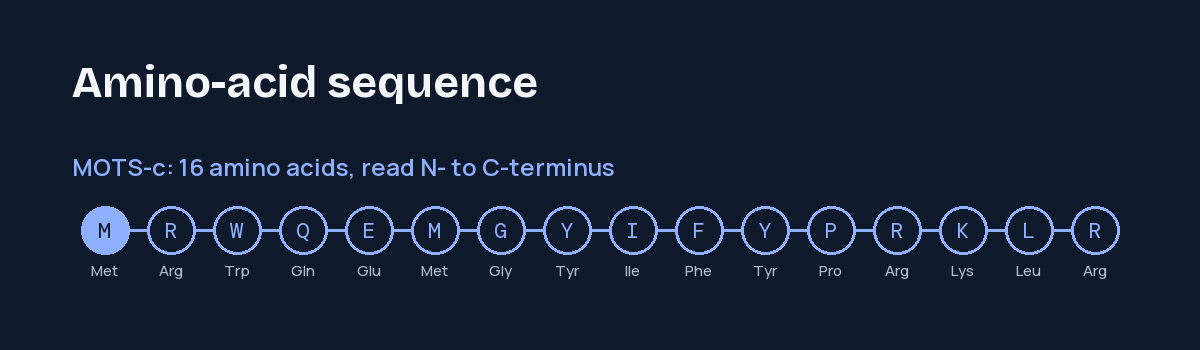
MOTS-c is a 16-amino-acid peptide encoded inside the mitochondrial genome, first described in 2015. In that Cell Metabolism study, MOTS-c prevented age-dependent and diet-induced insulin resistance in mice [Animal]. The body makes it naturally, and exercise raises its levels in human muscle and blood (Reynolds 2021) [Human, observational]. Synthetic MOTS-c has not been tested in a published human trial (FDA briefing). We compare it with another metabolic research compound in MOTS-c vs 5-amino-1MQ, and with an exercise-mimetic in SLU-PP-332 vs MOTS-c.
What is SS-31 (elamipretide)?
SS-31 is the research code for elamipretide, a synthetic four-amino-acid peptide. The Forzinity label describes it as “a mitochondrial cardiolipin binder”. It is indicated “to improve muscle strength in adult and pediatric patients with Barth syndrome weighing at least 30 kg” [Approved label]. Barth syndrome is a rare, life-threatening mitochondrial disease. The approval is accelerated, so continued approval may depend on a confirmatory trial. That trial, a 48-patient placebo-controlled study with a 72-week primary endpoint, started recruiting in July 2026 (NCT07531251). Every other use, from aging to athletic recovery, is unapproved.
What is NAD+, and how does NMN differ?
NAD+ (nicotinamide adenine dinucleotide) is a coenzyme that energy-metabolism enzymes need to work. “NAD” is the general name. FDA’s compounding list names two forms separately: NAD and NADH. NMN and nicotinamide riboside (NR) are “NAD+ intermediates”, molecules the body converts into NAD+. How they move through tissues is “still under intensive investigation” (Yoshino 2018 review). In a 12-month mouse study, oral NMN was quickly turned into NAD+ in tissues and eased age-related decline (Mills 2016) [Animal]. NAD+ itself is also given by IV infusion, which has only pilot data (Grant 2019).
NAD+ vs NMN: which has the evidence?
The two are compared constantly, but no trial has compared them with each other. No randomized trial has tested NMN against NAD+ itself. None of the NMN records on ClinicalTrials.gov compares NMN with NAD+. One recruiting trial compares NMN with NR and two other precursors (NCT06991712) (all searched 2026-11-05). So any “which works better” answer uses numbers from different trials, and those comparisons are cross-trial.
| Feature | NAD+ (direct, IV) | NMN (oral) |
|---|---|---|
| What reaches the blood | Human pilot n=11: “rapidly and completely removed” from plasma in the first 2 h (Grant 2019) | Human RCT n=32: blood NMN 1.7–3.7 times baseline at day 14 (Pencina 2023) |
| Effect on NAD+ levels | Retrospective n=14: could not be measured (Reyna 2026) | Human RCT n=80: up at days 30 and 60, p ≤ 0.001 (Yi 2023) |
| Best outcome result | None from a controlled trial | Human RCT n=25: muscle insulin sensitivity up (Yoshino 2021) |
| Pooled evidence | None | Meta-analysis of 15 RCTs (Yang 2026) |
| Reported side effects | Retrospective n=6: GI symptoms, faster heart rate, chest pressure | Meta-analysis: no rise in adverse events or liver enzymes vs placebo |
| US status | Unapproved; Category 1 (interim) for compounding | Not excluded from the supplement definition (FDA, 2025) |
What NMN may offer. In the largest dose-ranging trial, 80 healthy middle-aged adults took NMN or placebo for 60 days (Yi 2023) [Human RCT, n=80]. Blood NAD rose in every NMN group, and six-minute walk distance improved more than on placebo (p < 0.01). In 48 trained runners, six weeks of NMN raised oxygen use at the ventilatory thresholds, though VO2max did not change (Liao 2021) [Human RCT, n=48]. In 60 older adults, 12 weeks of NMN shortened 4-meter walking time and improved sleep-quality scores (Morifuji 2024) [Human RCT, n=60].
Where NMN falls short. The Morifuji trial missed its primary outcome, a stepping test. In 36 middle-aged adults, arterial stiffness did not differ from placebo after 12 weeks (Katayoshi 2023) [Human RCT, n=36]. Across trials, the 2026 meta-analysis found no effect on weight, BMI, fasting glucose, HbA1c, lipids or systolic blood pressure, and only a slight drop in diastolic pressure. A 2025 meta-analysis found no effect of NMN or NR on muscle mass, grip strength or gait speed.
What direct NAD+ shows. In an 11-person pilot, NAD+ infused over 6 hours was rapidly and completely removed from the plasma for at least the first 2 hours. The pattern of breakdown products pointed to enzymes that break NAD+ down (Grant 2019) [Human pilot, n=11]. The only comparison with another form is a records review of 6 IV NAD+ and 8 IV NR patients at a wellness-clinic chain (Reyna 2026). Its authors were employed by the chain, which funded the study, and blood NAD+ changes could not be measured. NR, the other common precursor, has its own small RCTs; its rows in the head-to-head table below come from those.
How they work differently
- MOTS-c: in cells and mice, it inhibits the folate cycle and purine synthesis. That activates AMPK, an energy-sensing enzyme, mainly in skeletal muscle (Lee 2015) [Animal, Lab]. Under metabolic stress, it moves into the cell nucleus and regulates antioxidant-response genes (Kim 2018) [Lab]. FDA reviewers still describe its molecular targets as unknown (FDA briefing).
- SS-31: binds tightly to cardiolipin, a fat in the inner mitochondrial membrane needed for the folds where ATP is made. In rats, it protected those folds during kidney ischemia (Birk 2013) [Lab, Animal].
- NAD+ / NMN: not a signal or a membrane binder but a raw material. Oral NR raised the NAD+ metabolome in the muscle of 12 older men, without changing mitochondrial energy output (Elhassan 2019) [Human RCT, n=12].
Evidence head-to-head
Each cell gives the best evidence level found for that outcome and the study behind it. “None found” means no study of that type turned up on PubMed or ClinicalTrials.gov (searched 2026-11-05). The figures come from different trials, so comparisons across columns are cross-trial, not head-to-head.
| Outcome | MOTS-c | SS-31 | NAD+ / NMN |
|---|---|---|---|
| Raising NAD+ | None found | None found | Human RCT n=80: NMN raised blood NAD (Yi 2023) |
| Insulin sensitivity | Animal: prevented insulin resistance in mice (Lee 2015) | None found | Human RCT n=25: NMN +25% (Yoshino 2021); RCT n=40: NR no effect (Dollerup 2018) |
| Physical function | Animal: better performance in young, middle-aged and old mice (Reynolds 2021) | Human RCT n=218: no gain in walk distance (MMPOWER-3) | Human RCT n=80: longer 6-minute walk (Yi 2023); meta-analysis: no muscle benefit (Prokopidis 2025) |
| Muscle energetics | None found in humans | Human RCT n=39: ATP capacity up after one infusion, gone by day 7 (Roshanravan 2021) | Human RCT n=12: NR, no change (Elhassan 2019) |
| Heart | None found in humans | Human RCT n=71: no change in heart volumes in HFrEF (PROGRESS-HF) | Animal: NMN restored systolic function in old mice (Whitson 2020) |
| Rare mitochondrial disease | None found | Approved label: Barth syndrome (Forzinity label) | Human, open-label: niacin raised NAD+ and strength in mitochondrial myopathy (Pirinen 2020) |
| Dry macular degeneration | None found | Human RCT n=176: primary endpoints missed (ReCLAIM-2) | None found |
| Brain | None found | None found | Human RCT n=30: NR raised brain NAD in Parkinson’s (NADPARK) |
| Safety data | None in humans (FDA) | Approved label; injection-site redness in 12 of 12 patients | Meta-analysis of 15 RCTs (10 with safety data): no rise in adverse events (Yang 2026) |
The Barth syndrome evidence deserves a closer look. In the label’s clinical studies section, the randomized crossover trial in 12 patients missed both primary endpoints, the 6-minute walk and a fatigue score [Human RCT, n=12]. In the open-label extension, 8 patients reached week 168, with a median knee-strength gain of 63 newtons. The TAZPOWER extension paper reported a 96.1-meter total improvement in walk distance by week 168 [Human, open-label, n=10]. The study was funded by the manufacturer, Stealth BioTherapeutics. Uncontrolled extensions can overstate benefit, which is why the confirmatory trial matters.
Which fits which goal?
These are evidence statements, not recommendations to use any of them.
- Barth syndrome: SS-31 has the only regulatory-grade evidence, an accelerated approval based on muscle strength (FDA).
- Raising NAD+ levels: oral NMN has the most evidence, from several RCTs (Yi 2023). IV NAD+ has pilot data only, and no trial has compared the two.
- Insulin sensitivity: NAD+ precursors have more human evidence: one positive NMN trial (Yoshino 2021) and one null NR trial (Dollerup 2018). MOTS-c has mouse data only.
- SS-31 vs MOTS-c for muscle and endurance: SS-31 has human trials, but its phase 3 in mitochondrial myopathy found no gain in walk distance (MMPOWER-3). MOTS-c’s performance data are from mice (Reynolds 2021). Neither has shown a benefit in people with healthy muscles.
- Weight loss: none has human weight-loss evidence, and the NMN meta-analysis found no effect on body weight (Yang 2026). FDA reviewers noted that approved obesity drugs exist (FDA briefing). We compare those drugs in retatrutide vs tirzepatide vs semaglutide.
- Aging in general: all rest on animal data for this goal. A small open-label elamipretide study in older adults is recruiting (NCT07275424).
Whether any of these is appropriate is for a clinician who knows the person’s history to decide.
Can they be combined?
Clinic and vendor pages often present these as a “mitochondrial stack”, and NAD+ drips are often paired with oral NMN. The only direct test of a combination was in animals. In old mice, SS-31 partly reversed a decline in diastolic heart function and NMN reversed a deficit in systolic function. Together, they raised resting NAD(H) levels more than either did alone, which the authors called synergistic (Whitson 2020) [Animal]. No controlled human study of any combination of MOTS-c, SS-31, NAD+ and NMN was found on PubMed or ClinicalTrials.gov (searched 2026-11-05). Interactions and combined side effects are unknown.
Safety and regulatory status
United States: FDA and HHS
- MOTS-c: not approved. It is listed among substances withdrawn from Category 2 by their nominators (FDA). FDA’s reviewers proposed not adding it to the 503A bulks list, citing immunogenicity concerns for an injected 16-amino-acid peptide (FDA briefing). The advisory committee then voted 7–5 with 2 abstentions to recommend listing, as reported by AJMC. That advice is non-binding, and FDA had posted no vote summary at our 2026-11-05 check (FDA meeting page). On 2026-10-30, HHS published a draft enforcement-discretion policy (Federal Register 2026-22192). It says HHS “does not intend to take enforcement action against a State-licensed pharmacy, Federal facility, or licensed physician” compounding the peptides in its appendix. NCPA and AJMC report that MOTS-c is one of the six listed. The policy is not binding, and HHS may revisit it if “a safety signal or product quality issue arises.” Listing still requires rulemaking (FDA 503A page). We explain the background in our FDA peptide compounding vote explainer.
- SS-31: approved only as Forzinity. The label warns of hypersensitivity reactions, including serious allergic reactions that need emergency care. It also warns of benzyl alcohol toxicity in newborns and is not approved for neonates. Injection-site reactions were the most common side effects.
- NAD+ and NMN: NAD and NADH are in 503A Category 1, “under evaluation” (FDA list). That is an interim enforcement policy, not an approval. In 2025, FDA concluded that NMN is not excluded from the dietary-supplement definition (FDA letter). That is a decision about legal category, not a review of safety or effectiveness.
Sport: WADA and USADA
- MOTS-c is named in S4.4.1 (AMPK activators) of the 2026 Prohibited List and is prohibited at all times. USADA adds that it is not FDA-approved for use in humans.
- SS-31 is not named on the 2026 List. The 2027 List, in force from 2027-01-01, names “peptides” in general under S0 (USADA 2027 advisory). Because elamipretide has a US approval, its status is not obvious. Athletes should check Global DRO or their anti-doping agency.
- NAD+ and NMN are not named. WADA method M2.2 prohibits IV infusions or injections of more than 100 mL per 12 hours outside hospital and similar settings, “even if the substance being injected or infused is permitted” (USADA).
What is known about side effects
For MOTS-c, safety in humans is unknown (FDA briefing, above). For elamipretide, the label’s safety table shows injection-site redness in 12 of 12 patients on the drug versus 3 of 12 on placebo, and injection-site pain in 9 versus 5. The phase 3 myopathy trial found most adverse events mild to moderate (MMPOWER-3). For oral NMN, a meta-analysis of RCTs lasting 14 days to 24 weeks found no rise in adverse events or liver enzymes (Yang 2026). Its authors still call for “larger and longer trials” to confirm long-term safety. For IV NAD+, the 6 patients in the clinic review reported “moderate to severe gastrointestinal symptoms, increased heart rate, and chest pressure” during infusions that averaged 97 minutes. The symptoms resolved when the infusions ended (Reyna 2026) [Human, retrospective, n=6].
Anyone who suspects a side effect from MOTS-c, SS-31, NAD+, NMN or any other drug or product can report it to the FDA through MedWatch.
How long do effects take in studies?
- SS-31: in Barth syndrome, knee-strength gains were not seen in the 12-week randomized phase. They appeared during the extension, measured from week 12 to week 168 (Forzinity label). A single infusion raised muscle ATP capacity at once, with no difference by day 7 (Roshanravan 2021).
- NMN and NR: NAD metabolites were higher by day 8 of NMN (Pencina 2023), and blood NAD was up at day 30 (Yi 2023). NR raised muscle NAD+ markers within 21 days (Elhassan 2019). The insulin-sensitivity change was measured after 10 weeks (Yoshino 2021).
- MOTS-c: no human timeline exists, and no trial of MOTS-c itself is registered.
What users report
What follows are unverified self-reports from people who usually bought unregulated products; it is not evidence. People who post about these compounds commonly describe more energy, better endurance in cardio sessions and easier fat loss. MOTS-c is most often linked to workouts, and NAD+ to mental clarity. Many say the effects were subtle, or that they could not tell which product did what, since several are often taken together. A recurring complaint about NAD+ IV drips is flushing, chest tightness, nausea or cramping during the drip, plus the hours it takes. NMN users more often report noticing nothing, and a common thread is people saying they stopped after months without feeling a difference. Injection-site redness and itching are the most common complaints about SS-31 and MOTS-c. Cost comes up often, as do doubts about whether products contain what the label says. The main arguments are over whether a drip beats a capsule, whether NMN or NR is the better precursor, and whether NAD+ belongs in a peptide discussion at all.
Frequently asked questions
Is SS-31 or MOTS-c better studied?
SS-31, clearly. Elamipretide is FDA-approved for Barth syndrome and has randomized trials of up to 218 patients, though its phase 3 in mitochondrial myopathy found no gain in walk distance (MMPOWER-3) [Human RCT, n=218]. MOTS-c’s best result is in mice, where it prevented diet-induced insulin resistance [Animal]. These are cross-trial, cross-species findings, not a head-to-head test.
How does SS-31 compare with NAD+ on evidence?
Both have human RCTs, for different goals. SS-31 raised muscle ATP capacity after one infusion in 39 older adults, an effect gone by day 7 (Roshanravan 2021) [Human RCT, n=39]. Oral NMN raised blood NAD in 80 adults over 60 days (Yi 2023) [Human RCT, n=80]. Only SS-31 has an approval, and these cross-trial figures measure different things.
MOTS-c vs NAD+: which has human data?
NAD+ precursors do; MOTS-c does not. NMN improved muscle insulin sensitivity by about 25% in 25 women with prediabetes (Yoshino 2021) [Human RCT, n=25]. MOTS-c prevented insulin resistance only in mice [Animal], and FDA found no human exposure data for it by any route. These are cross-trial findings.
Does NMN boost NAD+ levels?
Yes, in blood. In a 60-day randomized trial, every NMN group had higher blood NAD than placebo (Yi 2023) [Human RCT, n=80]. Higher NAD+ has not translated into broad benefits: a 2026 meta-analysis found no effect on weight, glucose, HbA1c or lipids.
What are the downsides of NAD+ IV drips?
Side effects during the drip, and little evidence of benefit. In a clinic records review, the 6 IV NAD+ patients reported moderate to severe stomach symptoms, a faster heart rate and chest pressure (Reyna 2026) [Human, retrospective, n=6]. No controlled trial has shown a health benefit. For tested athletes, infusions over 100 mL per 12 hours are prohibited.
Is SS-31 FDA approved?
Yes, but only for one use. Elamipretide received accelerated approval as Forzinity on September 19, 2025, to improve muscle strength in people with Barth syndrome who weigh at least 30 kg (FDA). Use for aging, energy or performance is unapproved, and research-chemical “SS-31” is an unapproved drug.
References
- US Food and Drug Administration. FDA Grants Accelerated Approval to First Treatment for Barth Syndrome. Press release, 2025-09-19. fda.gov
- Stealth BioTherapeutics / FDA. FORZINITY (elamipretide) injection, Prescribing Information, revised 9/2025 (NDA 215244). accessdata.fda.gov
- ClinicalTrials.gov. Phase 3b/4 randomized, double-blind, placebo-controlled trial of elamipretide in Barth syndrome (4TAZPower, NCT07531251). clinicaltrials.gov
- US Food and Drug Administration. Certain Bulk Drug Substances for Use in Compounding that May Present Significant Safety Risks. Content current as of 2026-04-22. fda.gov
- US Food and Drug Administration. FDA Briefing Document for MOTS-c-Related Bulk Drug Substances, Pharmacy Compounding Advisory Committee, July 23–24, 2026. fda.gov/media/193347
- US Food and Drug Administration. July 23–24, 2026: Meeting of the Pharmacy Compounding Advisory Committee. Content current as of 2026-08-06. fda.gov
- US Department of Health and Human Services. Enforcement Discretion Policy Regarding 503A Compounding Using Certain Peptide Bulk Drug Substances. Federal Register document 2026-22192, 2026-10-30. govinfo.gov
- US Food and Drug Administration. Bulk Drug Substances Used in Compounding Under Section 503A of the FD&C Act. fda.gov
- US Food and Drug Administration. Bulk Drug Substances Nominated for Use in Compounding Under Section 503A (categories list), updated 2026-05-14. fda.gov/media/94155
- US Food and Drug Administration, Human Foods Program. Response to citizen petition on β-nicotinamide mononucleotide (NMN), Docket FDA-2023-P-0872, 2025-09-29. regulations.gov
- World Anti-Doping Agency. The 2026 Prohibited List, International Standard. In effect 1 January 2026. wada-ama.org
- US Anti-Doping Agency. Athlete Advisory: What’s New on the 2027 WADA Prohibited List? usada.org
- US Anti-Doping Agency. What is the MOTS-c peptide? usada.org
- US Anti-Doping Agency. IV Infusions: Explanatory Note. usada.org
- Lee C, Zeng J, Drew BG, et al. The mitochondrial-derived peptide MOTS-c promotes metabolic homeostasis and reduces obesity and insulin resistance. Cell Metab. 2015;21(3):443-454. PubMed 25738459
- Kim KH, Son JM, Benayoun BA, Lee C. The mitochondrial-encoded peptide MOTS-c translocates to the nucleus to regulate nuclear gene expression in response to metabolic stress. Cell Metab. 2018;28(3):516-524. PubMed 29983246
- Reynolds JC, Lai RW, Woodhead JST, et al. MOTS-c is an exercise-induced mitochondrial-encoded regulator of age-dependent physical decline and muscle homeostasis. Nat Commun. 2021;12:470. PubMed 33473109
- ClinicalTrials.gov. A Phase 1a/1b Study of CB4211 in Healthy Non-obese Subjects and Subjects With Nonalcoholic Fatty Liver Disease (NCT03998514). clinicaltrials.gov
- Birk AV, Liu S, Soong Y, et al. The mitochondrial-targeted compound SS-31 re-energizes ischemic mitochondria by interacting with cardiolipin. J Am Soc Nephrol. 2013;24(8):1250-1261. PubMed 23813215
- Thompson WR, Manuel R, Abbruscato A, et al. Long-term efficacy and safety of elamipretide in patients with Barth syndrome: 168-week open-label extension results of TAZPOWER. Genet Med. 2024;26(7):101138. PubMed 38602181
- Karaa A, Bertini E, Carelli V, et al. Efficacy and safety of elamipretide in individuals with primary mitochondrial myopathy: the MMPOWER-3 randomized clinical trial. Neurology. 2023;101(3):e238-e252. PubMed 37268435
- ClinicalTrials.gov. A Trial to Evaluate Safety and Efficacy of Elamipretide in Primary Mitochondrial Myopathy (MMPOWER-3, NCT03323749). clinicaltrials.gov
- Ehlers JP, Hu A, Boyer D, et al. ReCLAIM-2: a randomized phase II clinical trial evaluating elamipretide in age-related macular degeneration. Ophthalmol Sci. 2025;5(1):100628. PubMed 39605874
- Butler J, Khan MS, Anker SD, et al. Effects of elamipretide on left ventricular function in patients with heart failure with reduced ejection fraction: the PROGRESS-HF phase 2 trial. J Card Fail. 2020;26(5):429-437. PubMed 32068002
- Roshanravan B, Liu SZ, Ali AS, et al. In vivo mitochondrial ATP production is improved in older adult skeletal muscle after a single dose of elamipretide in a randomized trial. PLoS One. 2021;16(7):e0253849. PubMed 34264994
- ClinicalTrials.gov. Study of Healthy Aging and Physical Function With Elamipretide (SHAPE, NCT07275424). clinicaltrials.gov
- Yoshino J, et al. NAD+ intermediates: the biology and therapeutic potential of NMN and NR. Cell Metab. 2018. PubMed 29249689
- Mills KF, Yoshida S, Stein LR, et al. Long-term administration of nicotinamide mononucleotide mitigates age-associated physiological decline in mice. Cell Metab. 2016;24(6):795-806. PubMed 28068222
- Yoshino M, Yoshino J, Kayser BD, et al. Nicotinamide mononucleotide increases muscle insulin sensitivity in prediabetic women. Science. 2021;372(6547):1224-1229. PubMed 33888596; full text PMC8550608
- ClinicalTrials.gov. Effect of “Nicotinamide Mononucleotide” (NMN) on Cardiometabolic Function (NCT03151239). clinicaltrials.gov
- Yi L, et al. The efficacy and safety of β-nicotinamide mononucleotide (NMN) supplementation in healthy middle-aged adults: a randomized, multicenter, double-blind, placebo-controlled, parallel-group, dose-dependent clinical trial. GeroScience. 2023. PubMed 36482258
- Pencina KM, et al. MIB-626, an oral formulation of a microcrystalline unique polymorph of β-nicotinamide mononucleotide, increases circulating nicotinamide adenine dinucleotide and its metabolome. J Gerontol A Biol Sci Med Sci. 2023. PubMed 35182418
- Morifuji M, et al. Ingestion of β-nicotinamide mononucleotide increased blood NAD levels, maintained walking speed, and improved sleep quality in older adults. GeroScience. 2024. PubMed 38789831
- Liao B, et al. Nicotinamide mononucleotide supplementation enhances aerobic capacity in amateur runners: a randomized, double-blind study. J Int Soc Sports Nutr. 2021. PubMed 34238308
- Katayoshi T, et al. Nicotinamide adenine dinucleotide metabolism and arterial stiffness after long-term nicotinamide mononucleotide supplementation. Sci Rep. 2023. PubMed 36797393
- Yang W, Huang J, Tang Z, Chen C, Sun Y. Safety and metabolism-related outcomes of oral nicotinamide mononucleotide supplementation in adults: a systematic review and meta-analysis. Nutrients. 2026;18(14):2251. PubMed 42514320
- Prokopidis K, Moriarty F, Bahat G, McLean J, Church DD, Patel HP. The effect of nicotinamide mononucleotide and riboside on skeletal muscle mass and function: a systematic review and meta-analysis. J Cachexia Sarcopenia Muscle. 2025;16(3):e13799. PubMed 40275690
- Dollerup OL, Christensen B, Svart M, et al. A randomized placebo-controlled clinical trial of nicotinamide riboside in obese men: safety, insulin-sensitivity, and lipid-mobilizing effects. Am J Clin Nutr. 2018;108(2):343-353. PubMed 29992272
- Elhassan YS, Kluckova K, Fletcher RS, et al. Nicotinamide riboside augments the aged human skeletal muscle NAD+ metabolome and induces transcriptomic and anti-inflammatory signatures. Cell Rep. 2019;28(7):1717-1728. PubMed 31412242
- Brakedal B, Dölle C, Riemer F, et al. The NADPARK study: a randomized phase I trial of nicotinamide riboside supplementation in Parkinson’s disease. Cell Metab. 2022;34(3):396-407. PubMed 35235774
- Pirinen E, Auranen M, Khan NA, et al. Niacin cures systemic NAD+ deficiency and improves muscle performance in adult-onset mitochondrial myopathy. Cell Metab. 2020;31(6):1078-1090. PubMed 32386566
- Grant R, Berg J, Mestayer R, et al. A pilot study investigating changes in the human plasma and urine NAD+ metabolome during a 6 hour intravenous infusion of NAD+. Front Aging Neurosci. 2019;11:257. PMC6751327
- Reyna K, Heinzen G, Patel N, Ritter M, Siojo A, Legere H, Pojednic R. Intravenous infusion of nicotinamide adenine dinucleotide (NAD+) versus nicotinamide riboside (NR): a retrospective tolerability pilot study in a real-world setting. Front Aging. 2026;7. PubMed 41704678
- ClinicalTrials.gov. Comparisons of NAD Precursors for Neuroenhancement in Glaucoma Patients (NCT06991712). clinicaltrials.gov
- Whitson JA, Bitto A, Zhang H, et al. SS-31 and NMN: two paths to improve metabolism and function in aged hearts. Aging Cell. 2020;19(10):e13213. PubMed 32779818
Methodology: how evidence levels are assigned is explained on How We Compare Peptides.
Change log
2026-11-05: added a NAD+ vs NMN section with its own comparison table, five more NMN trials, an IV NAD+ tolerability review, the HHS draft enforcement-discretion policy of 2026-10-30, the confirmatory Forzinity trial and the 2027 WADA List; re-checked every status row; removed the outdated status-box image; reviewed by the editorial team.
2026-10-19: links to related entries added; no change to the facts.
2026-10-18: removed ClinicalTrials.gov record NCT07505745, whose sponsor posts example records; MOTS-c now has no registered trial of its own, only the completed trial of its analog CB4211; reviewed by the editorial team.
2026-10-13: links corrected (a link inside a citation or on a generic word removed); no change to the facts.
2026-10-12: links to related entries added; no change to the facts.
2026-10-06: links to related entries were added on 2026-10-05; no change to the facts.
2026-10-04: byline removed from the opening so the answer leads; reviewed by the editorial team.
2026-10-03: first published after review by the editorial team.